A furnished property isn't always a move-in-ready property.
A home may look beautiful in photographs and work perfectly for a weekend getaway.
But would it still be comfortable after two or three months?
That's an important question for anyone preparing a mid-term rental.
Longer-stay guests need more than a bed and a few attractive furnishings.
They need a functional home where they can cook, work, rest, store belongings, and maintain everyday routines.
How you prepare your property depends on who you're hosting — see who actually uses mid-term rentals to understand different guest needs.
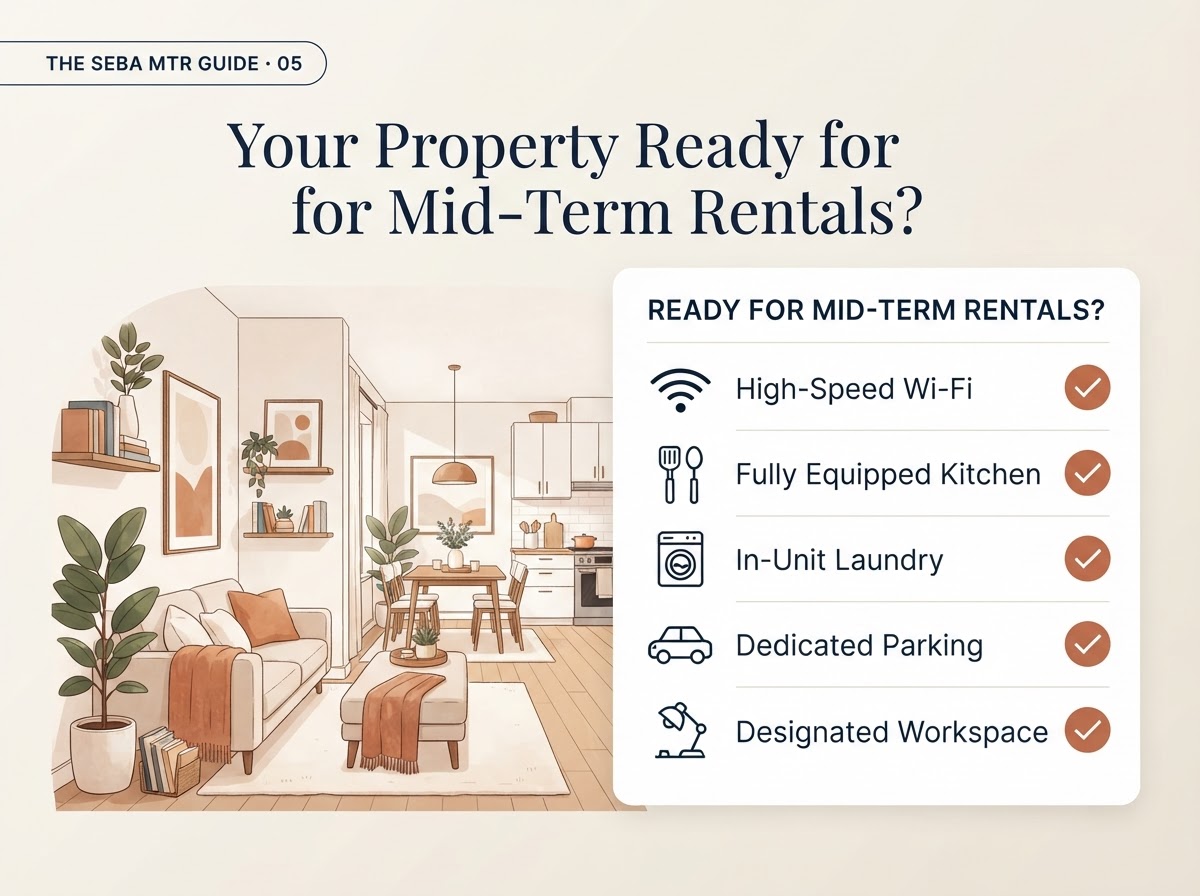
Here's how to evaluate your property's readiness.
1. Think About Everyday Living
Imagine living in your property for 90 days.
Would you have what you need?
| Everyday need | What to check |
|---|---|
| Sleeping | Comfortable beds, bedding, pillows, storage |
| Cooking | Pots, pans, dishes, utensils, appliances |
| Working | Reliable Wi-Fi, suitable workspace |
| Laundry | Washer/dryer or another practical arrangement |
| Relaxing | Comfortable seating, lighting, living space |
| Cleaning | Vacuum, broom, mop, basic supplies |
| Storage | Closets, drawers, space for belongings |
You don't need every possible amenity.
The goal is to make ordinary daily activities easy.
2. Match the Layout to Your Target Guests
A family, individual professional, and construction crew may use the same property very differently.
Before listing your home, document:
- Number of bedrooms
- Number and sizes of beds
- Number of bathrooms
- Available parking spaces
- Workspace availability
- Storage
- Occupancy limitations
Don't advertise a maximum guest count based only on how many people could physically fit inside.
Comfort, safety, and applicable occupancy rules matter.
3. Check Maintenance Before Move-In
A small inconvenience during a weekend can become a major frustration during a three-month stay.
Inspect:
- Heating and cooling
- Plumbing and drains
- Appliances
- Washer and dryer
- Internet connection
- Locks and access systems
- Smoke and carbon monoxide alarms
- Lighting
- Pest-control needs
Address known issues before guests arrive.
Also establish a process for reporting maintenance concerns during the stay.
4. Prepare for Longer-Stay Expenses
Mid-term guests may use utilities and household equipment differently from short-stay visitors.
Consider how you'll manage:
- Electricity, water, and gas
- Internet
- Lawn care
- Pest control
- Repairs
- Cleaning
- Furnishing replacement
- Household supplies
These expenses should be included in your financial planning and reflected in your rental pricing. Our Turnover & Cost Comparison Calculator can help you estimate these costs.
5. Check Regulations and Property Restrictions
Before accepting reservations, confirm that your intended rental model is permitted.
Depending on your property and location, this may involve:
- Local rental regulations
- Zoning and licensing
- HOA restrictions
- Minimum lease terms
- Insurance requirements
- Occupancy limits
- Security-deposit rules
- Applicable tenant protections
A 30-night minimum doesn't automatically exempt a rental from all legal requirements.
6. Prepare Your Guest Processes
The property may be physically ready, but your operations need preparation too.
Before arrival
- Guest screening and information
- Rental agreement
- Payment arrangements
- Check-in instructions
During the stay
- Guest communication
- Maintenance requests
- Payment tracking
- Extension requests
At departure
- Check-out instructions
- Inspection
- Cleaning
- Deposit reconciliation, when applicable
Having these processes in place can make the experience easier for everyone.
7. Make Your Listing Accurate
A useful mid-term rental listing should clearly explain:
- Bedroom and bed arrangements
- Monthly pricing
- Included utilities and services
- Parking
- Pet policy
- Minimum stay
- Availability
- Relevant property restrictions
Beautiful photographs attract attention.
Accurate, practical details help guests decide whether the property is right for them.
The Final Readiness Question
Could someone move into your property and comfortably maintain their everyday routine for several months?
Would they understand the pricing, rules, amenities, and available support?
If so, you're much closer to being ready.
A successful MTR isn't just furnished. It's prepared for everyday living.
Download the MTR Property Readiness Checklist
Use SEBA Housing's practical MTR Property Readiness Checklist to evaluate your property before welcoming longer-stay guests.