Owning a property doesn’t automatically mean it will make a good rental.
Before deciding how much rent to charge, where to list it, or what furniture to buy, there’s a more important question:
Does this property actually make sense as a rental?
The answer depends on more than the house itself. It depends on the property, the market around it, the people who need housing there, and the numbers behind operating it.
Here are some of the things worth considering.
1. Start With Demand, Not the Property
One of the first questions shouldn’t simply be:
“Is my house nice?”
Ask:
“Who would need to rent here?”
Rental demand can come from local employers, construction and infrastructure projects, hospitals, corporate travel, relocation, insurance displacement, universities, seasonal activity, families between homes, and more.
A beautiful property can still struggle if there isn’t enough demand for the type of stay you’re trying to attract.
Understanding who needs housing in your market — and for how long — is an important first step.
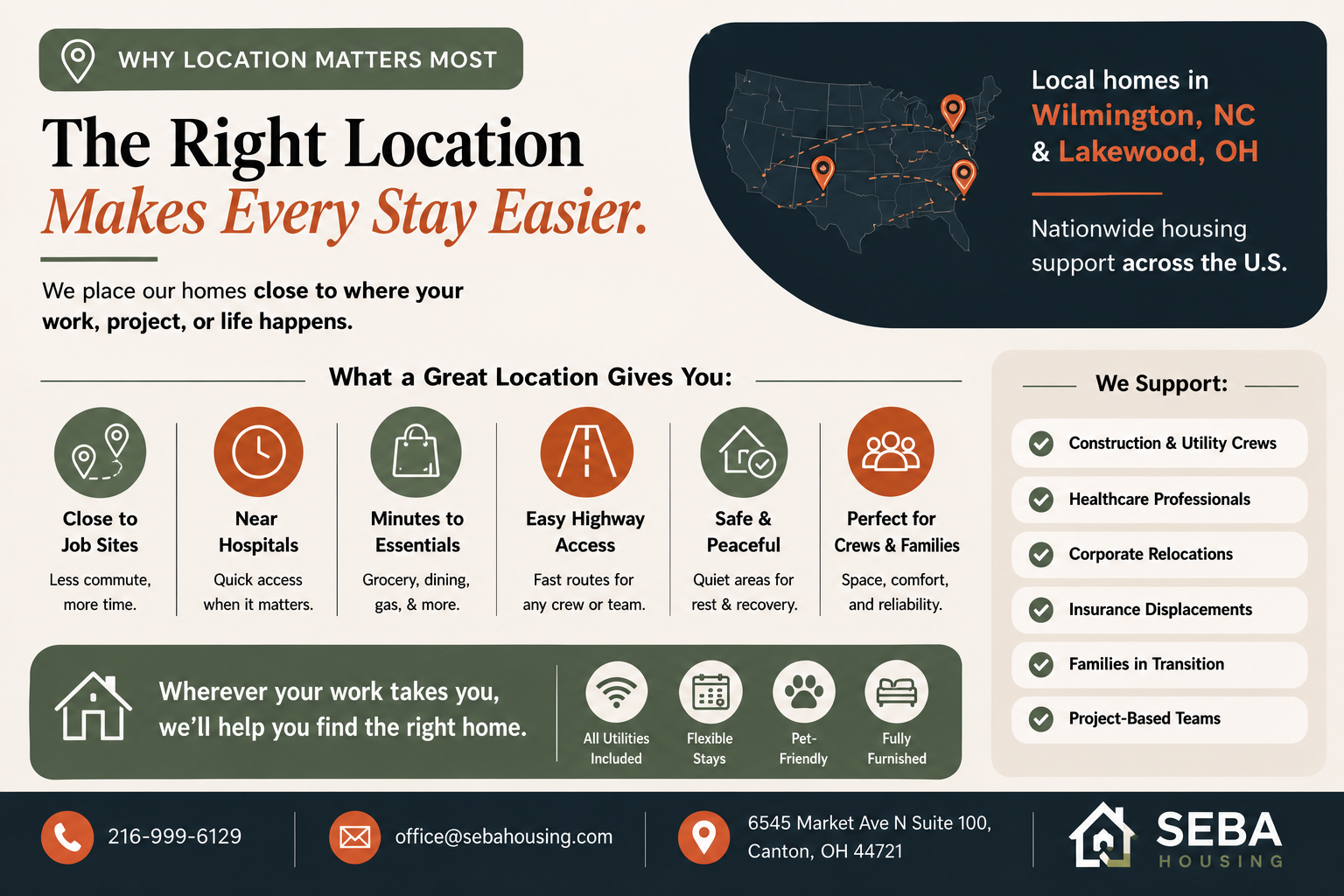
2. Location Means Different Things to Different Renters
A “great location” isn’t universal.
- A leisure traveler may prioritize attractions and restaurants.
- A construction or project crew may care much more about the commute to the job site and parking for multiple vehicles.
- A relocating family may prioritize groceries, schools and everyday conveniences.
- A traveling professional may need proximity to a hospital, office or project.
Instead of simply asking whether your property is in a good location, ask:
Good for whom?
3. Look Beyond Bedroom Count
Five bedrooms sounds great.
But how does the property actually function when people live there?
Consider:
- Number and configuration of beds
- Bathrooms
- Living and dining space
- Storage
- Kitchen functionality
- Laundry
- Workspace
- Overall occupancy
For certain renters, especially project teams and crews, separate beds can matter just as much as the number of bedrooms. See how we configure our furnished homes for teams and families.
4. Parking Can Make or Break the Fit
Parking is easy to overlook until a housing request requires it.
A home that works perfectly for one family may not work for a project team arriving with several vehicles.
Consider your driveway, garage, available street parking, HOA restrictions and the realistic number of vehicles the property can accommodate.
5. Calculate the Real Cost
Potential monthly rent is only one side of the equation.
Depending on your rental strategy, operating expenses can include:
Operating expenses: Utilities, internet, cleaning, maintenance, repairs, landscaping, pest control, management, insurance, taxes, vacancy, furnishings and replacement costs.
Want to see how the numbers compare across strategies? Try our Turnover and Cost Comparison Calculator.
What matters isn’t simply how much rent the property can generate.
It’s whether the numbers make sense after the costs of operating it.
6. Consider Maintenance
Features that make a property attractive can also make it more complicated to operate.
Pools, extensive landscaping, older systems, specialty appliances and other amenities may add value — but they can also add maintenance and expense.
That doesn’t make them bad features.
It simply means they belong in the calculation.
7. Know the Rules
Before renting, understand the requirements that apply to your particular property and location.
That may include local regulations, zoning, HOA rules, lease requirements, insurance considerations and other restrictions.
Those requirements may also change depending on how long someone stays.
8. Your House Could Be a Rental. Now, What Kind?
Even if your property has strong rental potential, you still need to choose a strategy.
- Short-term?
- Mid-term?
- Long-term?
Not sure which fits your property? Take our 2-minute Rental Strategy Scorecard to find out.
Each model serves different renters and comes with different levels of turnover, flexibility, furnishing, management and commitment.
There isn’t one strategy that’s right for every property.