The highest rental rate isn't always the most profitable one.
Pricing a mid-term rental involves more than choosing a monthly number.
You're offering furnished housing, often with utilities, internet, and other services included.
Your guests may also stay for several months, making booking length, vacancy, and operating costs important considerations.
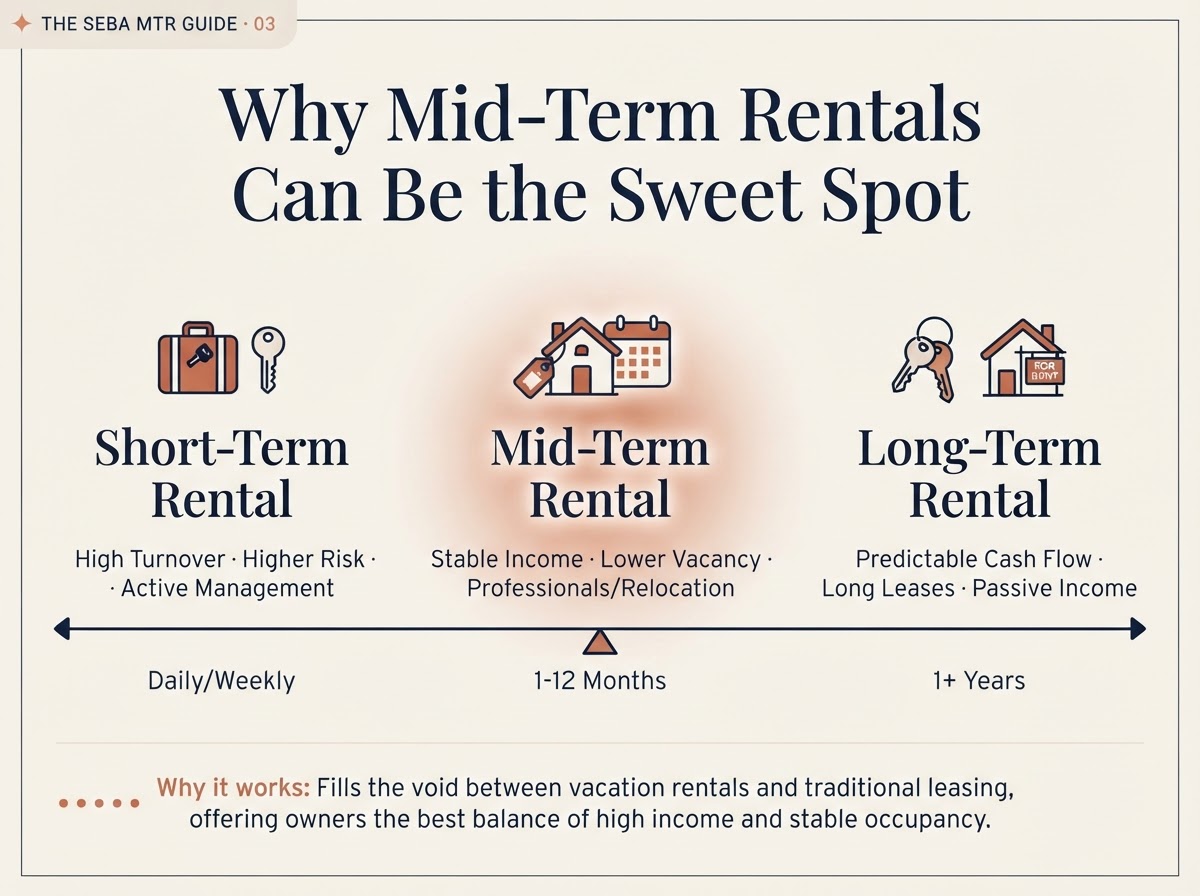
So how do you choose a rate that works for both the guest and the property owner? This connects to the financial framework we covered in why mid-term rentals can be the sweet spot and the property preparation steps in is your property ready for mid-term rentals.
1. Research Comparable Furnished Rentals
Start with properties that serve similar guests in your market.
Compare:
- Location
- Bedrooms and bathrooms
- Bed configuration
- Furnishings
- Amenities
- Parking
- Included utilities
- Minimum-stay requirements
A property designed for project crews may serve a different audience from an apartment targeting individual healthcare professionals.
Also remember that advertised prices don't necessarily reflect completed bookings or actual occupancy.
2. Understand Your Operating Costs
Before setting your rate, calculate what it costs to operate the property.
| Cost category | Examples |
|---|---|
| Property costs | Taxes, insurance, property-related expenses |
| Utilities | Electricity, water, gas |
| Connectivity | Internet |
| Maintenance | Repairs, preventive servicing |
| Property care | Landscaping, pest control |
| Cleaning | Turnover and agreed cleaning |
| Furnishings | Replacement, wear, household items |
| Management | Administration, software, coordination |
| Marketing | Booking fees, commissions, advertising |
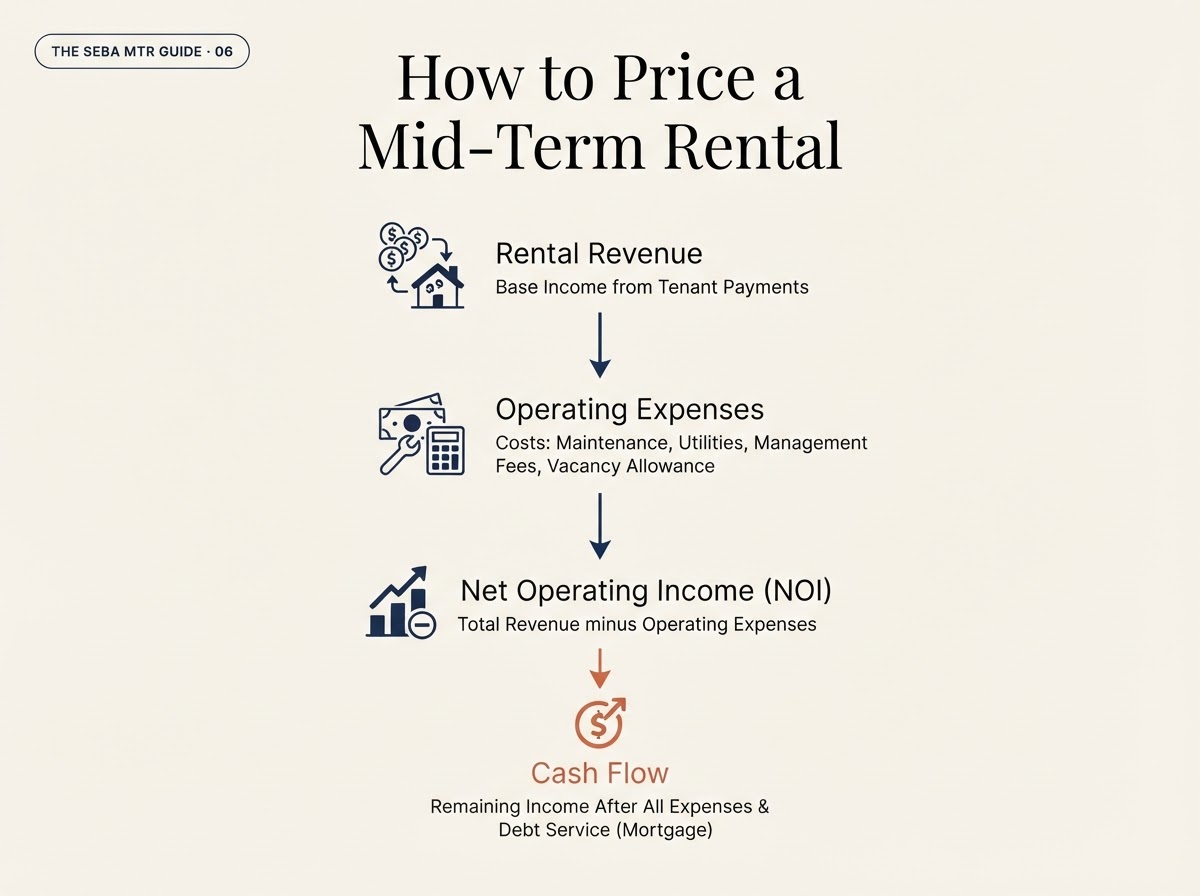
For cash-flow planning, include mortgage or other financing payments separately.
For NOI calculations, exclude financing payments and follow the appropriate accounting treatment for capital expenses.
3. Decide What the Monthly Rate Includes
Guests often appreciate clear, predictable pricing.
Your rate may include:
- Furnishings
- Electricity
- Water
- Gas
- Internet
- Lawn care
- Other agreed services
Some owners include utilities without separate billing. Others establish a clearly documented allowance where legally permitted.
Whatever structure you choose, explain it before the guest commits.
4. Separate Recurring Charges From One-Time Fees
Not every payment should be treated as monthly rental revenue.
Examples include:
- Refundable security deposits
- One-time cleaning fees
- Pet-related charges
- Additional agreed services
Clearly disclose applicable fees and comply with local laws and platform requirements.
Refundable deposits are generally liabilities while refundable, not earned revenue.
5. Account for Booking Fees and Commissions
The booking source affects how much revenue you retain.
A direct reservation, online platform booking, or corporate housing placement may involve different fees.
For example:
Monthly rent: $5,000
If an applicable booking fee is 10%:
- Booking fee: $500
- Amount remaining after the fee: $4,500
This is only an illustration. Actual fees depend on the platform or agreement.
You still need to subtract the other relevant operating expenses.
6. Consider the Length of Stay
A one-month booking and a six-month booking don't necessarily deserve the same rate.
Longer stays may reduce turnover and vacancy uncertainty.
But they also commit the property for a longer period.
Before offering a discount, evaluate:
- Seasonal demand
- Expected vacancy
- Turnover expenses
- Utility usage
- Opportunity cost
- Extension arrangements
A longer booking can be valuable, but its total contract amount alone doesn't tell you whether it's the best financial choice.
7. Put the Numbers Together
Here's a simplified example of a mid-term rental's monthly cash flow.
| Item | Monthly amount |
|---|---|
| Rental revenue | $5,000 |
| Property payment and fixed cash costs | −$2,000 |
| Utilities and internet | −$450 |
| Maintenance allowance | −$200 |
| Cleaning allowance | −$150 |
| Management and marketing | −$400 |
| Furnishing replacement allowance | −$100 |
| Estimated monthly cash surplus | $1,700 |
This is an illustrative cash-flow calculation, not a formal NOI or net-profit statement. It excludes any additional costs, vacancy adjustments, and taxes not listed.
What does this mean?
Your property generates $5,000 in monthly rental revenue.
But after the cash costs included in this example, only $1,700 remains.
That's why owners should evaluate more than the advertised rent.
A property with lower revenue and significantly lower expenses may sometimes deliver a better return.
8. Review Pricing as Conditions Change
Mid-term rental demand may shift because of:
- Seasonal changes
- Corporate assignments
- Construction projects
- Local housing demand
- Competition
- Rising operating costs
Track your inquiries, occupancy, booking performance, expenses, and cash flow.
Adjust your rates based on evidence rather than assumptions.
What's the Right Monthly Rate?
A sustainable rate should reflect:
- What comparable guests are willing to pay.
- What your property costs to operate.
- Which services and utilities are included.
- Booking fees and commissions.
- Expected vacancy and length of stay.
- Your financial goals.
The goal isn't simply to charge more. It's to create a rental model that makes financial sense.
Compare Your Rental Costs
Explore SEBA Housing's Turnover & Cost Comparison Calculator to better understand how expenses and turnover affect different rental strategies.